
The Ocean Does Not Ask Me to Explain Myself
There was a point on the drive toward Hampton Beach when I began looking for the first sign of the ocean. I couldn’t see it yet. The road still looked much like any other road, bordered by buildings, traffic lights and the occasional glimpse of sky. But something in me had already started to shift. I knew the water was close.
By the time I arrived at Hampton Beach, I was ready to put down whatever I had been carrying. Not my bags, but the other things: the decisions waiting to be made, the work that was not quite finished, the messages I needed to answer, the needs of the people I love. The thoughts I had been turning over, as though thinking about them one more time might finally produce certainty.
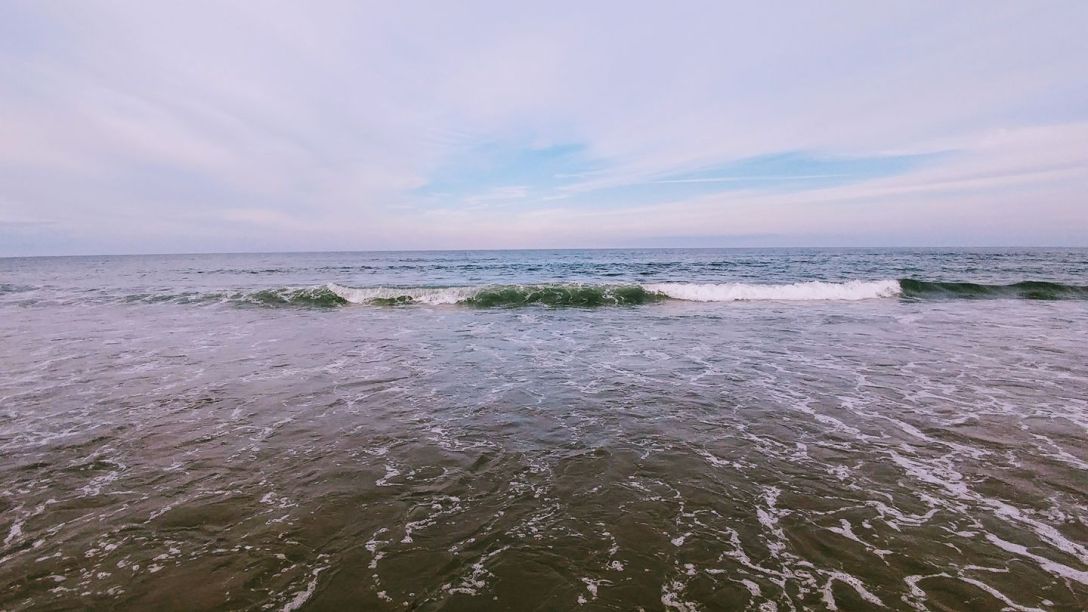
I walked toward the beach and heard the ocean before I saw it. There is something about that sound that interrupts the internal conversation. The waves do not eliminate my thoughts, but they make them less convincing. The concerns that felt urgent in a quiet room become part of a much larger landscape. They are still there, but they no longer occupy the entire horizon.
I have always been drawn to water. Swimming, sitting beside a pool, walking along the shore—each brings me back to myself in a different way. But the ocean creates a sense of spaciousness I find nowhere else. It does not ask anything of me. It does not need to know what I have accomplished or what I plan to do next. It does not ask whether I made the right decision, handled something well or met the expectations placed upon me. I do not have to be productive beside it. I do not have to be helpful, composed or certain.
I do not have to explain myself.
That realization feels simple, but I have come to understand how rare it is.
Both the Defendant and the Cross-Examiner
Much of adult life involves explanation. We explain our choices, our absences, our priorities and our changes of direction. We explain why we stayed and why we left. We explain why something matters to us, why we need more time or why what once worked no longer does. Sometimes the questions come from other people. Often, they come from within.
The internal questioning can be relentless. Was that the right thing to do? Should I have tried harder? Am I doing enough? What will people think? What am I missing? Even after we have made a decision, we can continue presenting the case for it in our own minds. We gather evidence, anticipate objections and prepare responses for conversations that may never happen. We become both the defendant and the person conducting the cross-examination.
I know that pattern well. My professional background trained me to examine evidence, identify risk and notice what others might overlook. Those skills served me for almost two decades and continue to shape how I see the world. Discernment matters. Good judgment requires us to look beyond the most convenient explanation. But the mind, always trying to protect and predict, does not always know when its work is complete.
When Analysis Stops Producing Clarity
Analysis can continue long after it has stopped producing clarity. What began as thoughtful reflection becomes an attempt to secure permission—from other people, from the future or from some imagined authority who can guarantee that our choice is acceptable. The ocean offers no such guarantee. It does not tell me whether I am right. It does not reassure me that everything will unfold as I hope. It simply gives me enough space to hear myself without the noise of a defence.
On my last trip, I moved through the day according to what my body was asking for. I swam. I rested. I returned to the water. There was no carefully optimized schedule and no pressure to make the most of every hour. The day found its own rhythm.
The Places That Hold No Role for Us
When we live with responsibility for other people, listening to ourselves can begin to feel like a luxury. Attention naturally moves outward. Who needs something? What has to be handled? What could go wrong if we stop paying attention? Over time, we can become so accustomed to responding that we lose touch with the quieter signals underneath our competence. We continue functioning. We continue meeting expectations. From the outside, everything may appear fine. Yet a part of us has been waiting for an environment in which it does not have to perform a role.
This is one reason certain places matter so much. They hold no history of what we are supposed to be. They do not remember our mistakes or depend on our usefulness. They allow us to encounter ourselves outside the expectations that usually organize our attention. Near the ocean, I am not my résumé. I am not the person with the answer. I am not responsible for anticipating every possible outcome.
I am simply present.
This does not mean I become someone different at the beach. I become less occupied with proving who I am. The roles soften enough for me to notice what remains beneath them. There is relief in that, but also honesty.
Self-Trust Is a Kind of Listening
When the explanations stop, we sometimes discover that we already know what we think. We know which commitment is draining more than it is giving. We know which decision we have been postponing. We know where we have been agreeing out of habit rather than alignment. We know when we are tired. The difficulty is not always a lack of clarity. Sometimes clarity has been present for a long time, waiting beneath our need to justify it.
We often treat self-trust as confidence: the ability to move forward without doubt. I have come to see it differently. Self-trust is the willingness to remain in conversation with ourselves, even when the answer is inconvenient. It is being able to hear what is true without immediately putting it on trial. That kind of listening requires space. It also asks us to step out of the mind’s stories and return to the body.
For me, the ocean creates it naturally. For someone else, it may be a forest, an empty kitchen early in the morning, a long drive or a familiar chair beside a window. The place itself matters less than what becomes possible there. There are environments where we expand and environments where we contract. There are people around whom we can think clearly and others around whom we begin rehearsing explanations before we have even spoken. There are moments when our attention settles and moments when it becomes preoccupied with managing how we are perceived. The body often recognizes these differences before the mind does.
Beside the ocean, my breathing changes. My shoulders release. My attention moves outward toward the horizon and then quietly returns to me. None of this solves the practical realities waiting at home. The unfinished work remains unfinished. The decisions will still require judgment. People will still need me. But I return with more of myself available to meet them.
That is why I keep going back. Not to escape my life, but to remember that I exist beneath everything I manage within it. The ocean does not ask me to account for every choice that brought me to its edge. It receives me without a résumé, a defence or a plan.
For a little while, I can do the same.
If you want to go deeper
If this is a pattern you recognize in yourself — the quiet cross-examination that continues long after a decision is made — Inner Child Freedom goes deeper into where these patterns come from and how to meet them without losing yourself in them. There’s a free companion workbook as well.
Curious about your own decision patterns? Stress shapes not only how we respond but the choices we make. My free Decision Clarity Scorecard is a good place to start.
My weekly newsletter The Clarity Brief has weekly insights on the patterns behind how you think, decide, and respond when it matters most. One issue a week, no noise. And I do NOT send more than one email per week.
Holistic Vagus Nerve Reset — practical tools for settling the nervous system when the body stays braced long after the moment has passed.
Discover more from Reflections
Subscribe to get the latest posts sent to your email.

 Reflections